WHAT A £2,000,£5000 AND £10,000 ENGAGEMENT RING ACTUALLY GETS YOU - London Rocks Jewellery

WHAT A £2,000,£5000 AND £10,000 ENGAGEMENT RING ACTUALLY GETS YOU

WHAT A £2,000,£5000 AND £10,000 ENGAGEMENT RING ACTUALLY GETS YOU - London Rocks Jewellery

What a £2,000, £5,000 and £10,000 Engagement Ring Actually Gets You

A Realistic Guide to Engagement Ring Budgets and Diamond Value

One of the most common questions men ask when buying an engagement ring is simple:

“What do I actually get for my budget?”

If you’re searching for engagement rings under £2,000, a £5,000 engagement ring, or a £10,000 diamond engagement ring, the difference in what you receive can be significant.

But the truth is that engagement ring value isn’t just about the price. It’s about how the budget is allocated between diamond size, diamond quality, ring design, and craftsmanship.

This guide explains what a £2,000, £5,000 and £10,000 engagement ring budget typically buys in today’s UK jewellery market—and how to get the best value at each price point.


What a £2,000 Engagement Ring Looks Like

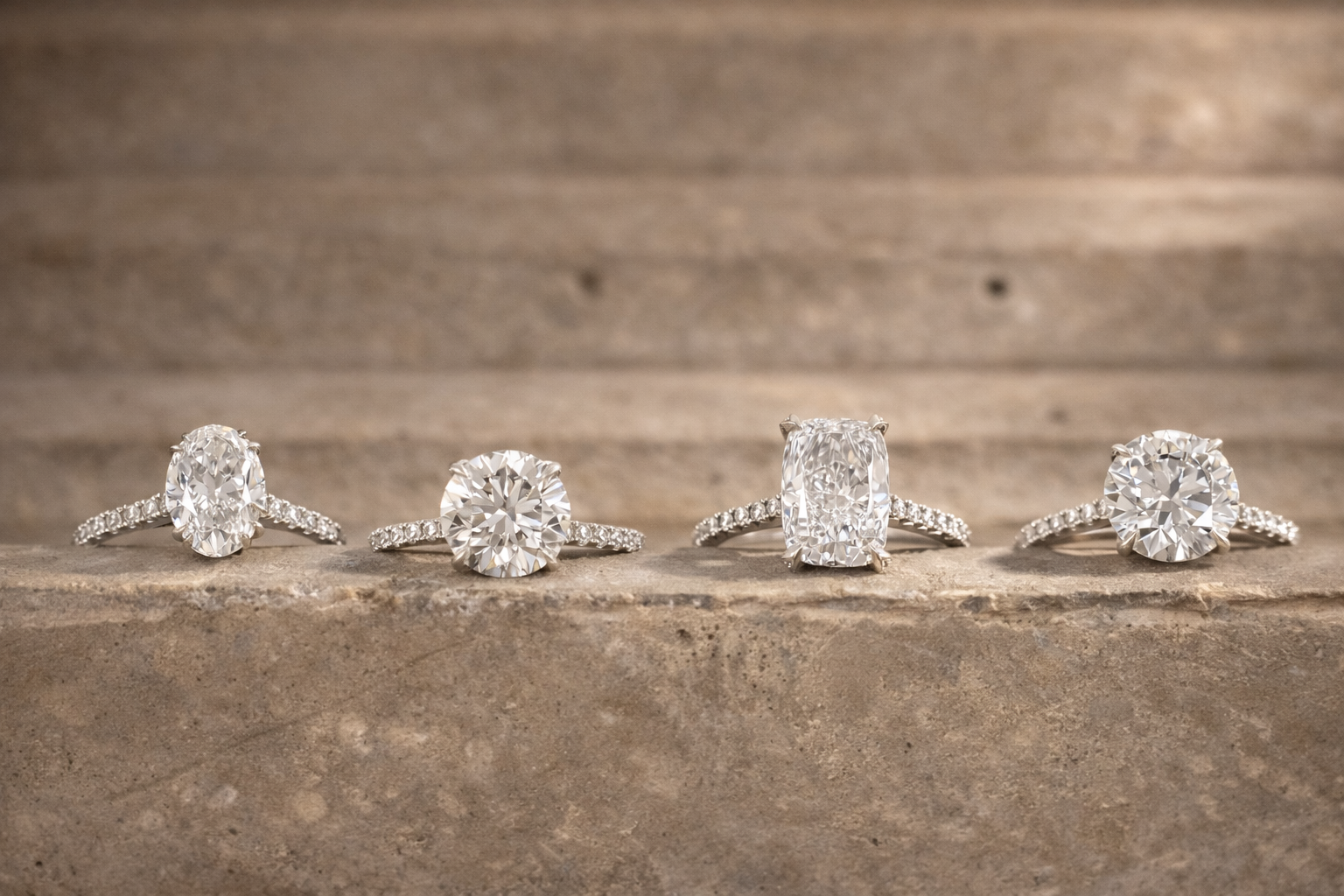
 KIRBY (OVAL-CUT) - London Rocks Jewellery - Rings


A £2,000 engagement ring budget is considered an entry-level budget for a natural diamond engagement ring, but it can still produce a beautiful and meaningful ring.

At this price point, buyers typically choose between:

  • A smaller natural diamond

  • A larger lab-grown diamond

Natural Diamond Option (£2,000 Budget)

With a natural diamond engagement ring, a £2,000 budget might typically buy:

  • 0.25–0.40 carat diamond

  • Colour around H–J

  • Clarity around SI1–SI2

  • A simple solitaire engagement ring setting

  • 18ct gold or platinum band

These diamonds can still appear beautiful, particularly when the diamond cut quality is good.

Lab-Grown Diamond Option (£2,000 Budget)

A lab-grown diamond engagement ring allows buyers to maximise size at this price point.

For around £2,000 you may be able to get:

  • 0.80–1.20 carat lab-grown diamond

  • Higher colour grades such as F–G

  • Higher clarity such as VS

  • Classic solitaire or halo ring design

This is why many buyers researching lab-grown vs natural engagement rings choose lab-grown stones at lower budgets.


What a £5,000 Engagement Ring Looks Like

A £5,000 engagement ring budget sits very close to the UK national average engagement ring spend, making it one of the most common budgets.

At this level, buyers have far more flexibility in terms of diamond size, diamond quality, and ring design.

Natural Diamond Option (£5,000 Budget)

For a natural diamond engagement ring, £5,000 might typically buy:

  • 0.70–1.00 carat diamond

  • Colour around G–H

  • Clarity around VS2–SI1

  • Excellent or Very Good cut quality

  • Platinum or 18ct gold engagement ring setting

This is where buyers often reach the iconic 1 carat diamond engagement ring milestone, depending on diamond quality and market pricing.

Lab-Grown Diamond Option (£5,000 Budget)

With a lab-grown diamond, a £5,000 budget can provide significantly larger stones.

Typical options may include:

  • 2.00–3.00 carat lab-grown diamond

  • Colour D–F

  • Clarity VS–VVS

  • Custom or bespoke engagement ring settings

This price point is where buyers begin exploring bespoke engagement ring design and more unique ring styles.


What a £10,000 Engagement Ring Looks Like

A £10,000 engagement ring budget enters the premium diamond engagement ring market.

At this level, buyers typically prioritise either:

  • Large natural diamonds

  • Exceptional diamond quality

  • Highly bespoke ring design

Natural Diamond Option (£10,000 Budget)

With £10,000, a natural diamond engagement ring might typically include:

  • 1.20–1.60 carat diamond

  • Colour F–G

  • Clarity VS1–VS2

  • Excellent cut

  • High-quality platinum engagement ring setting

  • Possible bespoke design elements

At this level, buyers can often select beautifully balanced diamonds with excellent sparkle and strong presence on the hand.

Lab-Grown Diamond Option (£10,000 Budget)

A lab-grown diamond budget of £10,000 can produce extremely large stones.

Typical examples might include:

  • 3–5 carat lab-grown diamonds

  • Colour D–F

  • Clarity VVS

  • Custom bespoke engagement ring designs

This is why some buyers choose lab-grown diamonds when their priority is maximum diamond size.


Where You Buy the Ring Also Affects Value

Another important factor when comparing engagement ring prices is where you buy the ring.

Different retailers offer very different value for the same budget.

High-End Luxury Jewellery Houses

Luxury brands such as:

  • Graff

  • Boucheron

  • Harry Winston

  • Chopard

  • Boodles

  • Tiffany & Co.

offer world-class craftsmanship and prestige.

However, buyers should expect 20–30% of the price to reflect brand name and luxury retail experience.

Independent Jewellery Boutiques

Many experienced buyers find the best value engagement rings at independent jewellery boutiques.

Boutique jewellers often offer:

  • Higher diamond quality for the same budget

  • Bespoke engagement ring design

  • Personalised consultations

  • Greater flexibility in diamond sourcing

This often means more of the budget goes into the diamond itself rather than brand marketing.

High Street Chain Jewellers

High street retailers such as:

  • H. Samuel

  • Beaverbrooks

  • Ernest Jones

typically sell mass-produced engagement rings designed to meet specific retail price points.

While convenient, these stores may offer:

  • Lower diamond colour and clarity

  • Less design flexibility

  • Limited bespoke options


Why Diamond Size Increases Price So Quickly

One important factor buyers often don’t realise is that diamond prices increase exponentially with size.

Larger diamonds are much rarer than smaller diamonds.

When rough diamonds are discovered, they often contain internal imperfections. To maximise value, cutters frequently divide the rough stone into multiple smaller diamonds rather than producing one large stone.

This means large, clean diamonds are extremely rare, which is why the price jumps dramatically at key weights such as:

  • 1 carat

  • 1.50 carat

  • 2 carat

Understanding this helps buyers make smarter decisions when choosing diamond carat weight vs value.


Choosing the Right Engagement Ring Budget

Ultimately, the best engagement ring budget is the one that fits comfortably within your finances.

For some buyers that may be £2,000.
For others it might be £5,000 or £10,000.

What matters most is finding the best balance between diamond size, diamond quality, and ring design.

A good jeweller will help guide you through:

  • Natural vs lab-grown diamonds

  • Diamond cut, colour, clarity and carat weight

  • Engagement ring settings and styles

  • How to maximise value within your budget


Final Thoughts

A £2,000 engagement ring, £5,000 engagement ring, and £10,000 engagement ring can all produce beautiful results—it simply depends on how the budget is used.

Understanding diamond pricing, diamond rarity, and engagement ring design options allows buyers to make more informed decisions.

Because ultimately, the best engagement ring isn’t defined by price.

It’s the one that reflects the meaning, thought, and experience behind the moment you propose. 💍